What If You Raised the Objection First?
3 Minute Read
SUMMARY: This article explains why knowing your audience includes knowing the objections they haven’t said out loud yet. It shows how WellCrafted Story, founded by Dave Ward, Jimmy Hays Nelson, and Dr. Danny Brassell, treats objections as part of Clarity, using client homework, audience research, and an interview format in which the host raises the objection first. The result is a message that earns trust and the next conversation in investor pitches, prospect meetings, and other high-stakes presentations.
What If You Raised the Objection First?
Here’s how it usually starts.
Early in our work with a client, we sit down and talk about "Clarity". It comes down to two questions. Who is your ideal audience? What is the problem you solve?
Most people can answer those. Then we ask a third one: with all the great things about your offer, why would someone hesitate to move forward?
Often they’ll bring up one or two right away, then run out. So we assign it as homework. We explain why it matters and how we’ll help them deal with each one. A few days later, an email shows up with a long list.
We do this with nearly every client who has an offer. It isn’t a one-off exercise. It’s part of how we begin.
Why objections belong in Clarity
The Clarity questions sound simple, but both require deep thinking and usually some research. All that work informs how the presentation takes shape.
When we say “audience,” we mean anyone you’re talking to. It might be a room full of people, one investor across a table, or a single prospect on a call.
We aren't just interested in "who" the ideal audience is. We want to know how they think. Knowing who they are includes knowing how they make decisions. What do they weigh? What makes them pause? What would they quietly be thinking while you’re talking?
The client knows their offer better than anyone. But the client is looking at it from the inside. So we also do extensive research on how that audience decides and what they’re likely to worry about. The client’s list shows what they can see. The research shows what the audience sees.
Don't "hide the ogres"
As a young lawyer, Dave worked at the 8th largest law firm in the world. When prospective hires would come for interviews, the firm would "hide the ogres", meaning keep them away from some of the lawyers in the firm who were...let's say less than cordial.
This isn’t about hiding anything or manufacturing doubt. It’s the opposite. We’re not trying to make the objection disappear. We’re working out how it gets handled.
Every business, investment, and person has a fault or two. There’s always some hair on the deal. It is far better to say “here’s an issue, and here’s how we’re addressing it” than to leave someone thinking “that’s an unresolved issue.”
Why say it first
Most of us have sat across from someone who skipped past the obvious problem as if it did not exist. You don’t stop thinking about it. You start wondering what else isn’t being said, and everything after that gets filtered through the doubt.
That leaves the listener with a mental block. They are essentially stuck on the elephant in the room that no one is talking about.
When someone names the concern for you, the reaction flips. You feel understood, and you can listen to the rest.
The interview format
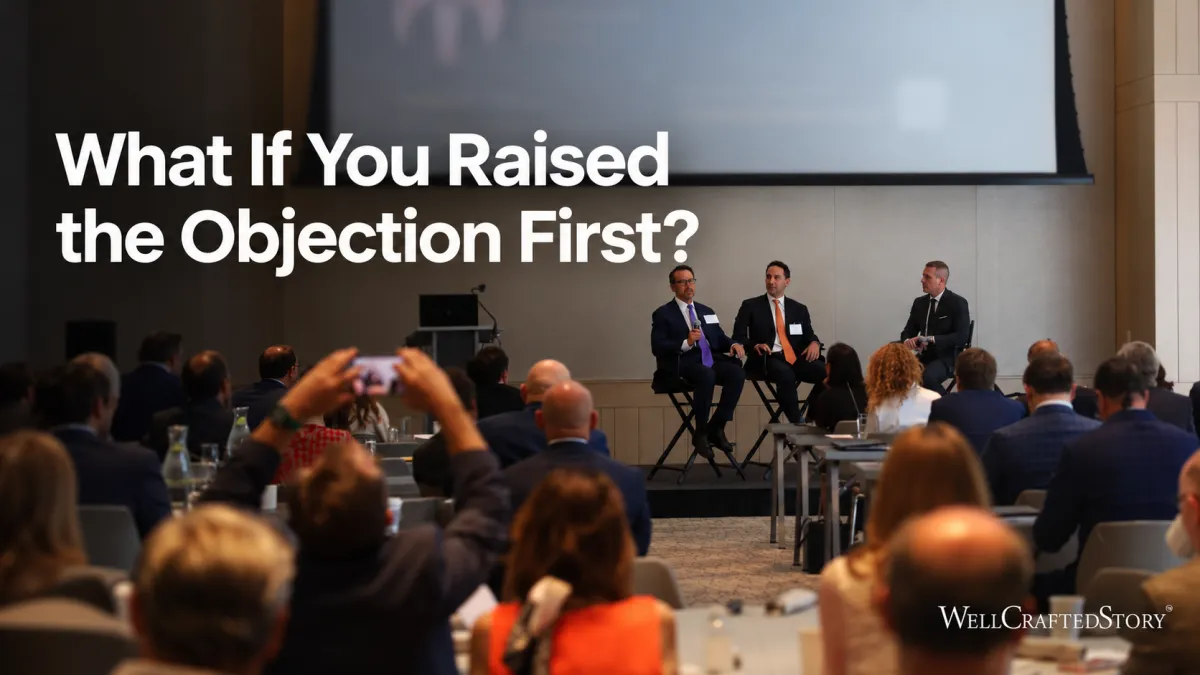
One way we put this into practice is a conversation on stage in place of a formal pitch. At an investor conference, JIMMY HAYS NELSON interviewed a client. He asks the questions and watches the clock. And he raises the likely objections himself, before anyone in the audience has to.
That leaves the client free to answer in their own words, from what they know best. It’s the same Clarity work, done out loud.
It also allows Jimmy to edify the client and help them stand out from the rest of the presenters who have a tendency to run through 30 dense slides in 15 minutes.
It only looks easy. The research on the audience, the client’s own list, and the rehearsal all happen long before anyone sits down.
A hard part, and where the answer comes from
A reader on Dave's Wednesday post pointed out how hard it is to do this skillfully, without seeming low confidence or losing momentum. He’s right.
In my view, the answer isn’t delivery. It’s preparation. You can say the hard thing calmly when you’ve already decided what the answer is.
Your next step
If you want help finding the objections your audience has before they raise them, book a call with Dave at www.workwithdaveward.com.
The point
Clarity isn’t only knowing who your audience is. It’s knowing how they’d say no.
Somebody in the room is already thinking about it. Better that they hear it from you first.


